Rethinking Housing In Periurban Landscapes

Updated: May 9
Topic of Research - Spatial Transformation in House Forms In Periurban Region
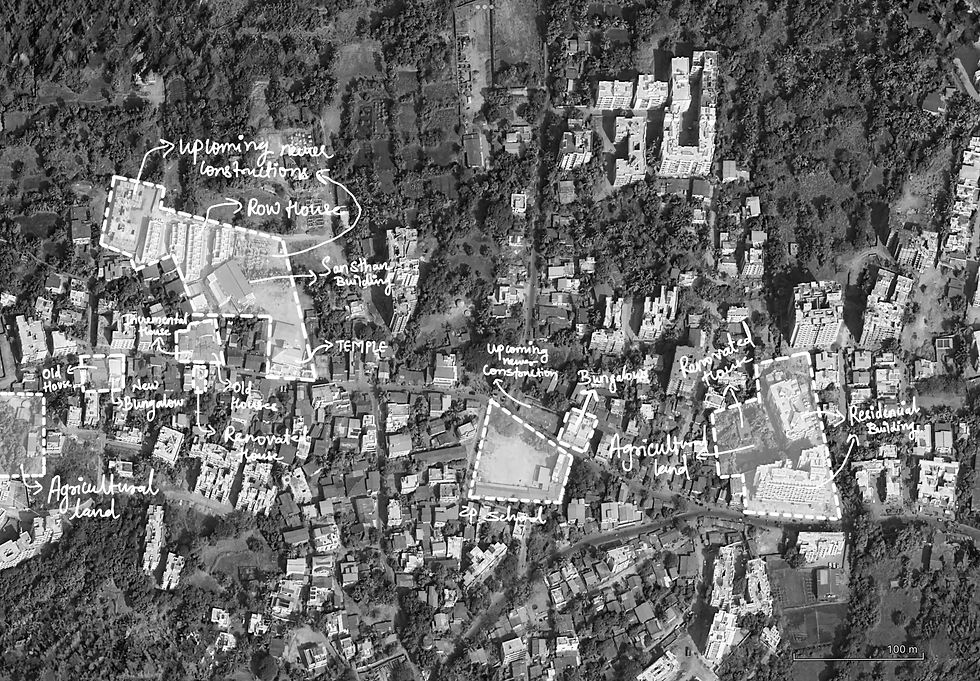
The research examines emerging urbanism in Tembhode, Palghar, focusing on shifts in housing typologies, land-sharing, and material aspirations driven by social and economic forces, using household documentation and village-wide observations to understand spatial transformations.


Thesis Findings:
The emerging urbanism not only creates opportunities in housing for migrants and mixed gated community living but also results in certain losses due to its evolving typologies:
Opportunities
House extensions and incremental expansion create opportunities for migrants to find affordable accommodation, promoting houses as a rental-based economic model.
New developments allow mixed communities of people to inhabit the area together.
Housing becomes a financial model for economic advancement and organizational growth for local families.
Public events serve as cultural gatherings for the community and outsiders, providing financial benefits.
Problems
Urbanisation is leading to a shift in house types - from communal, shared agrarian homes to nucleated family living, where renovations and new standardized mid-rise apartments reduce shared living and social interaction.

Agricultural land is gradually disappearing due to rapidly increasing construction.

The loss of ecological relationships is leading to issues such as flooding and waterlogging.

Argument and Design Question :
What will be the future urbanism of Palghar?
How can housing, currently developing in a laissez-faire manner, respond to the upcoming large-scale projects shaping Palghar’s future?
How can we rethink housing to balance shared community spaces and individual privacy at the same time?
What new forms of housing can integrate ecological sensitivity and sustainable methods for future development?
Design Question
How can future housing and spatial types enable contemporary, sustainable forms of inhabitation that respond to the evolving needs of both local residents and migrants?
Site Selection
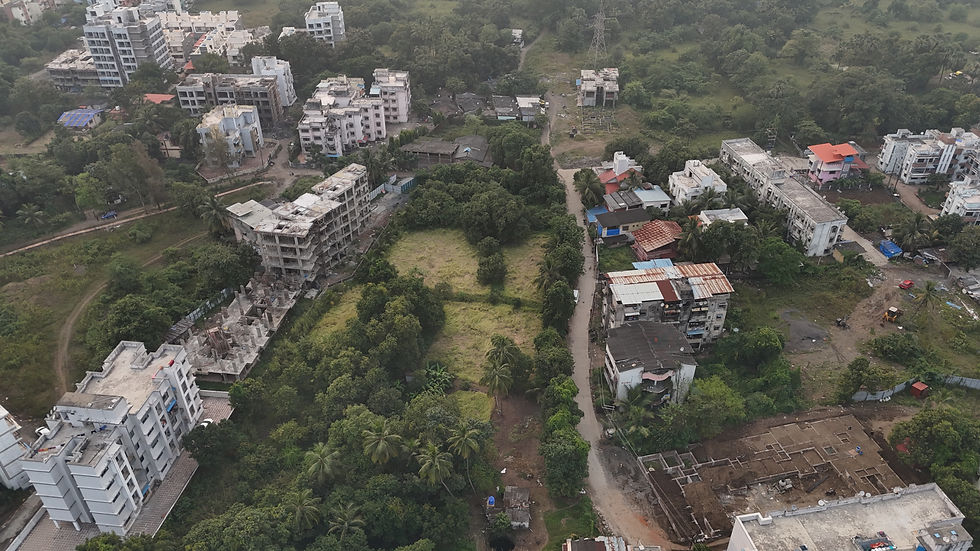
The purpose of selecting an agricultural plot as the site is based on the research conclusion that new development is gradually taking over agricultural land.
Kishor Patil’s land is still used for agriculture, unlike many other agricultural plots in the area that have already been sold to developers and contractors for villagers’ economic benefit.
This land also has the possibility of being sold in the future due to ongoing development pressure.
The project takes this future possibility as an opportunity to propose sustainable housing forms that coexists with ecology while retaining the agricultural landscape.
The aim is to balance livelihoods and built form, ensuring that the relationship between housing and the agricultural landscape is not lost.
Site Forces

Site Images
Land Ownership and Usergroup Diagrame :
Existing Site Plan

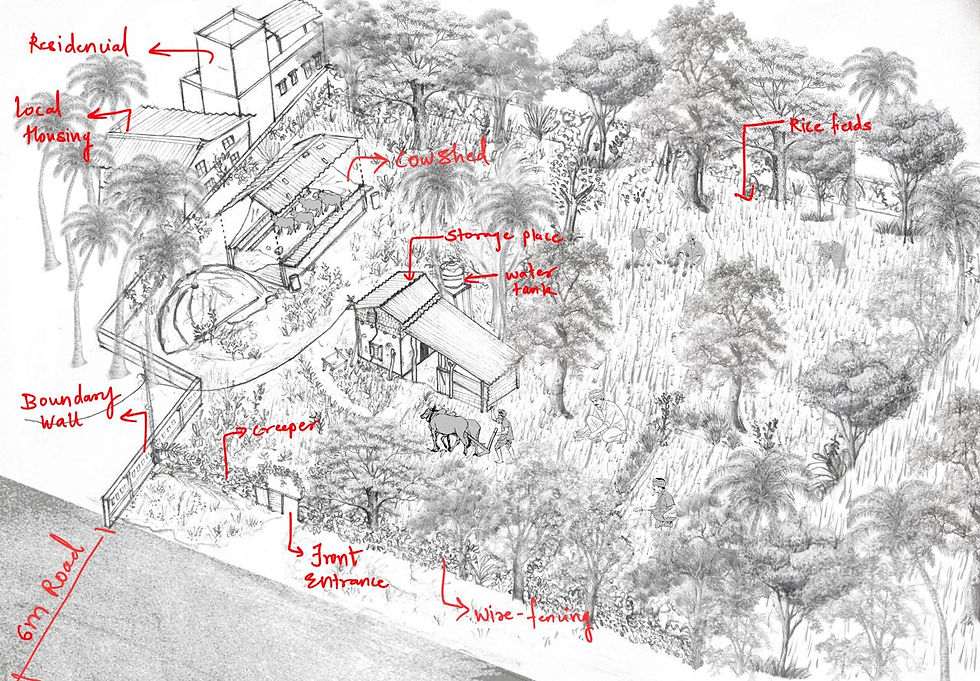
Site Observation
Programme Statement
Imagining housing through a lens that allows it to co-exist with the agricultural landscape, responding to the emerging urbanism of Palghar.
Project Scope
The project intervenes by rethinking future residential typologies that are carefully inserted within nature, allowing the built form to emerge within the landscape rather than replace it. It aims to accommodate a mixed community of residents, encouraging social life through shared spaces while retaining agricultural practices that support the local economy and preserve the agricultural landscape.
Site Analysis and Tree Identification
Conceptual Iterations
Design Site Plan

Ground Floor Plan

First Floor Plan

Long Section 1

Long Section 2

Front Elevation
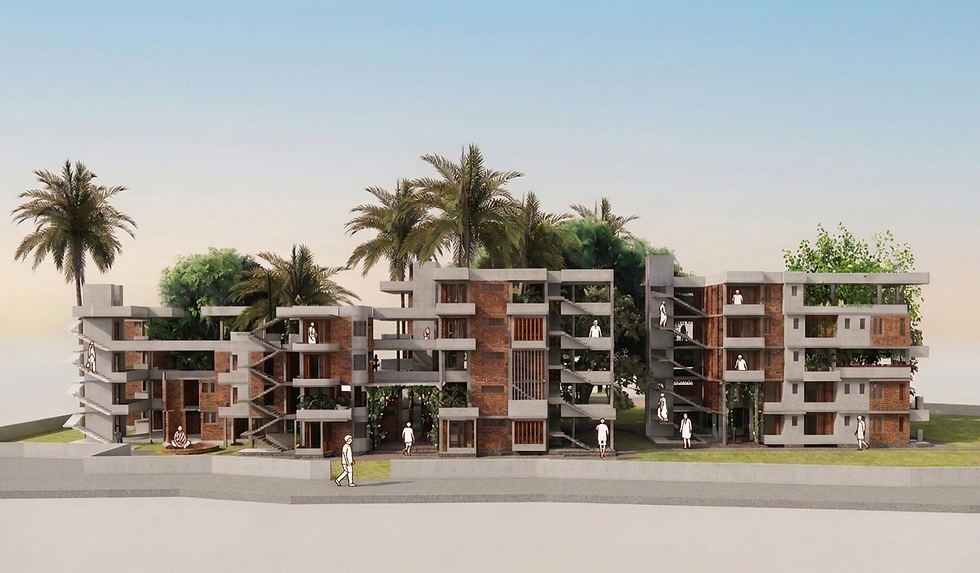
Main Entance

Shared Spaces
Cross Section showing Reed Bed System


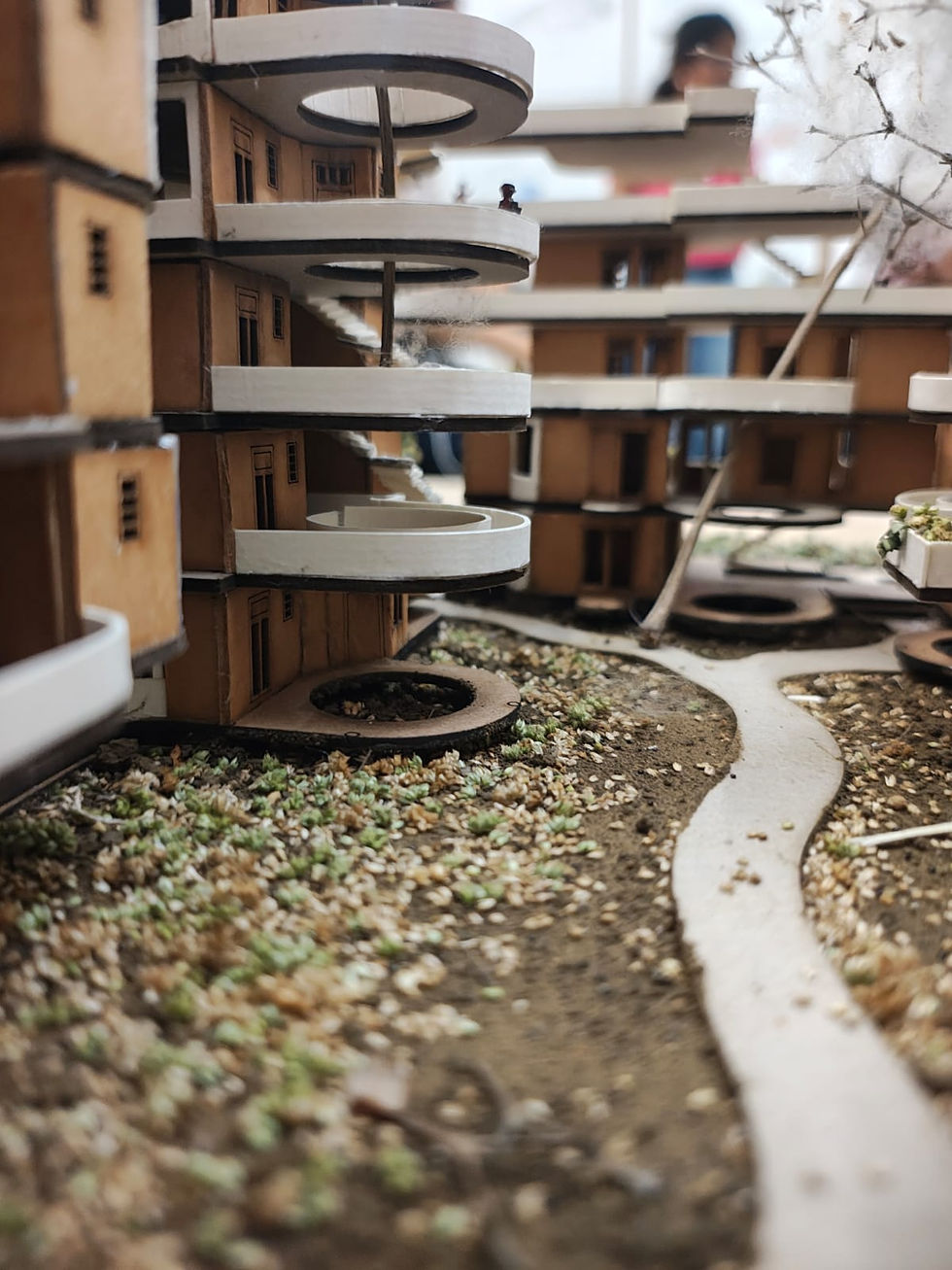
Model Images



Comments